


STAR WARS™: KOTOR II
Aspyr Media, Inc.
I spent time with STAR WARS™: KOTOR II as a story-led adventure RPG, and my first impression was that it asks for more patience than most mobile games. This is not a quick round-based distraction or a free download built around constant short sessions. It is a substantial single-player experience adapted for Android, with a slower pace, heavier dialogue, and decisions that matter more than reflexes. If you enjoy exploring a complicated science-fiction story at your own speed, it can feel unusually rewarding on a phone or tablet.
The game comes from Aspyr Media, Inc. and carries a Teen content rating. It was released on December 18, 2020, and the current version is 2.0.4. Android support starts at version 6.0, which makes it accessible to a broad range of devices, although compatibility on paper is not the same as a perfect experience on every older phone. The store summary presents it as a classic Star Wars role-playing game on Android, but that short description does not really explain the commitment involved.
The important buying detail is simple: this is a paid game priced at $14.99. There is no need to approach it like a free-to-play title and wonder where the main experience is hidden behind repeated purchases. You pay for access to the game itself, so the value question is whether a long, dialogue-heavy Star Wars adventure suits you better than several cheaper or free mobile alternatives.
How the adventure feels on a phone
The opening hours are deliberately measured. Instead of immediately giving me a constant stream of dramatic battles, the game spends time establishing its atmosphere, characters, and central mystery. That slower introduction is one of its strengths when I am in the mood to listen and investigate, but it can also be the point where impatient players decide it is not for them.
I found the best way to play was with headphones and a comfortable screen, preferably a tablet when available. The interface is usable on a phone, but menus, character information, and conversations benefit from extra space. On a smaller display, I sometimes felt that the game was asking me to manage a console-sized role-playing experience through controls that were designed around touch rather than a physical controller.
Related News






Touch controls let me move through environments, interact with objects, select dialogue, and manage combat. They are functional rather than elegant. Movement can take a little adjustment, especially when I am trying to position a party member or inspect something near a wall. The game becomes easier to handle once I stop expecting modern mobile controls and accept that careful taps and deliberate menu navigation are part of the experience.
That is also why this is better suited to a phone or tablet that I can hold for a proper session than to tiny gaps in the day. I can play for a short while if I only want to complete a conversation or explore a nearby area, but the story makes more sense when I have enough time to remember who is involved, what I promised, and why a particular choice matters.
Choices are more important than fast reactions
The strongest part of the game is the way conversations encourage me to pay attention. Dialogue is not just a pause between fights. It shapes how I understand the characters and the wider conflict, and it often makes me consider whether the most immediately helpful response is also the wisest one. I enjoyed having room to make decisions that reflected the kind of character I wanted to play rather than simply selecting the most obvious heroic answer.
Gallery
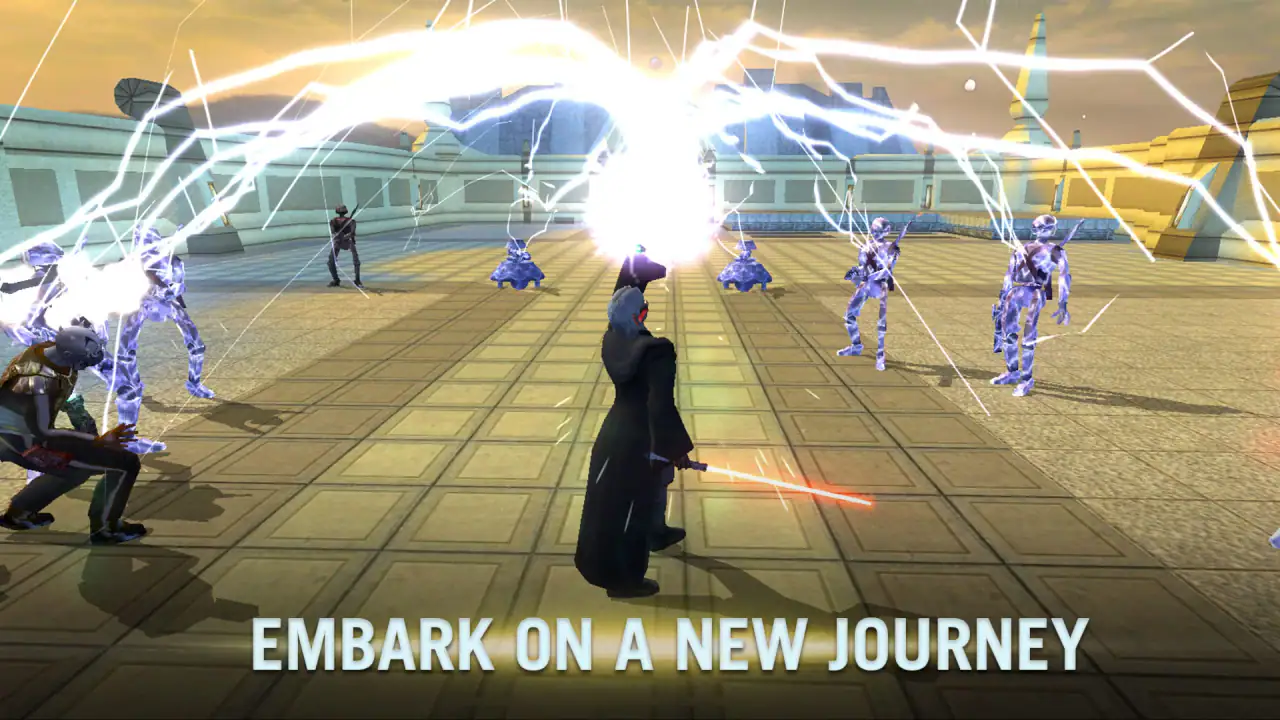
A useful tip is to avoid clicking through conversations too quickly. Some exchanges reveal information gradually, and a response that sounds harmless can change the tone of a relationship or close off a line of questioning. I also recommend saving before major conversations if you want to explore different outcomes without committing your entire playthrough to one decision. That approach preserves the role-playing element while reducing the frustration of realizing much later that you missed something important.
The game rewards curiosity in another way. I found that speaking with companions more than once was worthwhile, even when I thought I had already exhausted a conversation. Their reactions can add context to the journey, and the party feels more meaningful when I treat its members as people with motives rather than as interchangeable combat tools.
Combat and character management require attention
Combat is real-time with the ability to pause and issue commands, which gives it a different rhythm from a purely turn-based mobile RPG. I can let an encounter unfold, interrupt it to choose an action, and then adjust when the situation changes. That system is helpful on a touchscreen because pausing gives me time to inspect the battlefield instead of trying to perform every action instantly.
It is still possible to become overwhelmed if I allow the party to fight without supervision. Enemies can expose a poorly prepared character, and a group that looks strong on paper may struggle if its equipment, abilities, and roles do not work together. My practical advice is to pause early, not only when the battle is already going badly. Checking targets and issuing a few clear commands at the start usually feels better than trying to repair a chaotic fight afterward.
Character development adds another layer of responsibility. There are choices to make about how each member grows, what equipment they use, and which abilities fit the role I want them to play. New players do not need to understand every option immediately, but careless choices can make later encounters harder. I preferred building a clear identity for each character instead of spreading every improvement across unrelated skills.
Inventory management is another mobile friction point. The equipment screens are useful, but sorting through items can interrupt the story, especially after exploring a large area. I learned to sell, equip, or discard things regularly rather than allowing the inventory to become a second task. Players who enjoy optimizing a party will appreciate the control; players who want a cinematic adventure with almost no administration may find it tiring.
Exploration rewards a slower routine
The environments are designed for searching rather than simply following a straight path. I often found reasons to check side rooms, speak with people again, or return to an earlier location after gaining new information. That structure makes the world feel more connected, but it also means the game does not always tell me exactly where to go next in the most convenient way.
When I became unsure, I found it more useful to review recent dialogue and objectives than to wander randomly. Keeping track of names, locations, and promises saved time. This is one of the less obvious adjustments for mobile players: the game rewards remembering context, while many newer phone games constantly mark the next action for you.
Exploration also creates a meaningful trade-off with session length. A short play session may end just as I reach an interesting conversation, while a longer session can involve travel, investigation, combat, and several menu decisions before the next major story beat. I would not choose this game for a five-minute commute unless I was already in the middle of a simple objective.
What the paid price means in practice
At $14.99, the game needs to be judged as a premium purchase rather than as a casual free download. That price is easier to justify if I want a complete-feeling role-playing adventure that I can revisit, experiment with, and play without the usual free-to-play pressure. It is harder to justify if I mainly want something lightweight, instantly accessible, or disposable.
The purchase also changes how I think about the game’s rough edges. I can accept older design habits more readily because the appeal is the depth of the adventure, not the polish of a brand-new mobile interface. However, paying upfront does not make touch controls feel modern, and it does not remove the need for patience with menus, dialogue, and exploration. The price buys access to a classic-style RPG experience; it does not turn that experience into a streamlined contemporary phone game.
Its reception suggests that many players find the package worthwhile: it holds a 4.3 average from around 6 thousand ratings, with approximately 1.9 thousand written reviews and over 100 thousand installs. Those figures do not replace personal taste, but they do fit my impression that the game has a committed audience while still being more specialized than a mass-market casual title.
There is no reason to compare the cost directly with a free game unless the type of experience is also compared. A free action game may offer faster sessions and more immediate feedback, but it will not necessarily provide the same emphasis on dialogue, party decisions, and a long-form Star Wars narrative. Conversely, a different premium adventure may be a better choice if you want newer controls, shorter chapters, or less inventory management.
Where it fits among mobile alternatives
Compared with typical free mobile RPGs, this game feels less focused on daily retention and more focused on completing an adventure. I do not open it because I am chasing a short reward loop; I open it because I want to know what happens next or because I want to see how a different decision changes a situation. That makes it refreshing when I am tired of games that constantly divide progress into small, repetitive tasks.
Compared with modern action adventures on mobile, it is less immediate. There is more reading, more planning, and more time spent in menus. Someone who prefers direct movement, rapid combat, and visually guided objectives may find the experience old-fashioned. Someone who enjoys classic role-playing design may see the same qualities as the reason to play it.
It also differs from a simple interactive story. The choices matter, but I still have to manage a party, explore locations, handle equipment, and deal with combat. That combination gives the game more depth than a dialogue-only adventure, though it also creates more opportunities for friction. I would choose it over a purely linear story game when I want agency and systems, but not when I want to relax without thinking about builds or resources.
Who will get the most from the purchase
I think the strongest audience is a Star Wars fan who enjoys the less obvious corners of the universe and is willing to spend time with characters rather than only chase spectacle. The game is especially appealing to players who like making role-playing decisions, revisiting conversations, and seeing how a party develops across a substantial journey.
It is also a good fit for someone who wants an offline-friendly style of entertainment in the broad everyday sense of being able to settle into a self-contained adventure rather than depend on other players. A realistic scenario would be a quiet evening at home: I can play through a conversation, pause during a battle when someone needs attention, and stop after reaching a natural objective instead of worrying about a multiplayer team waiting for me.
Tablet owners may find the interface more comfortable, while phone users should be prepared for a denser presentation. A controller-oriented player should also approach it with realistic expectations: touch is supported as the mobile input method, but the game’s underlying design still feels like a classic computer or console RPG adapted to a smaller screen.
I would skip it if I dislike reading, regularly abandon games that take time to establish their story, or want a game that explains every objective with modern convenience. I would also skip it if $14.99 feels too high for a mobile purchase and I am not specifically looking for a premium role-playing adventure. There are cheaper ways to fill a few minutes, even if they offer a very different kind of value.
Small habits that make the experience better
My first recommendation is to create a save routine. Save before important conversations, before entering a dangerous area, and before experimenting with a major character decision. This is not about trying to force the “best” outcome; it simply protects the time invested in a long adventure and makes experimentation less stressful.
Second, build the party around complementary roles instead of giving everyone the same type of ability. When an encounter becomes difficult, the answer is not always a stronger weapon. Sometimes the problem is that the group lacks a useful response to the enemy or that I am asking one character to perform too many jobs. Thinking about the party before a difficult section can prevent repeated reloads.
Third, talk to companions when the story gives you a quiet opportunity. Their conversations are easy to postpone because there is always another hallway or objective, but they are part of the game’s value. I got more from the journey when I treated those exchanges as content rather than optional interruptions.
Finally, do not judge the entire game by the opening stretch. The early pacing is intentionally restrained, and the experience becomes more compelling once I understand the people around me and the questions driving the plot. That does not mean every player will enjoy it, but it does mean a rushed first session can give an unfair impression.
My buying decision
For me, STAR WARS™: KOTOR II is worth considering at its paid price when the priority is a deep, story-focused adventure rather than instant mobile convenience. The strongest value comes from the combination of meaningful dialogue, party management, exploration, and the freedom to shape a personal playthrough. I appreciate that it asks me to participate in the story instead of merely watching it unfold.
The compromises are clear. Touch controls and menus can feel cumbersome, the pacing is not designed for everyone, and the amount of reading and decision-making may be too much for players who want quick action. The game also demands that I remember context and accept occasional friction instead of guiding me through every step with modern interface design.
My verdict is to buy it if you already enjoy classic RPGs, want a substantial Star Wars story, and can give it focused sessions. I would skip it if you are searching for a free, casual, fast-moving mobile game or if premium pricing makes experimentation uncomfortable. With a 4.3 average and more than 100 thousand installs, it has clearly found a sizable audience, but its real appeal is narrower and more specific: this is a patient player’s adventure, not a universal pick for every phone gamer.
FAQs for STAR WARS™: KOTOR II
What is STAR WARS™: KOTOR II?
STAR WARS™: Knights of the Old Republic II is a story-driven role-playing game set in the Star Wars universe, taking place several years after the original KOTOR. You play as an exiled Jedi who travels across the galaxy, meets memorable companions, makes important moral choices, and gradually uncovers a larger conflict involving the Force and the Sith. The game focuses heavily on dialogue, exploration, character development, and decision-making.
Can I play KOTOR II offline on Android or iOS?
Yes, the mobile version is designed primarily for offline play, which makes it suitable for traveling or playing without a constant internet connection. You normally need internet access to download the game and complete any required installation or updates, but the main single-player campaign does not depend on an online multiplayer service. Available storage space and device compatibility should be checked before downloading.
Does the mobile version include the restored content?
The standard mobile release includes the original KOTOR II experience adapted for touchscreen devices, but the restored content known from the fan-made Restored Content Mod is not automatically included in every version. Support and compatibility can vary depending on the platform and release. Players interested in additional restored story material should check the current store description and official information before installing any compatible modification.
What devices are compatible with STAR WARS™: KOTOR II?
Compatibility depends on your operating system, device model, processor, available memory, and software version. Although the game is available for both Android and iOS, older phones and tablets may not be supported or may provide a less comfortable experience. Before purchasing, review the official Google Play or App Store requirements. A device with a larger screen can also make menus, dialogue, and combat controls easier to manage.
Is KOTOR II suitable for players who have not played the first KOTOR?
You can play KOTOR II without completing the first game, because it has its own protagonist, locations, companions, and central conflict. However, familiarity with the original KOTOR can make references, returning concepts, and the political situation easier to understand. New players should expect a slower, dialogue-heavy role-playing experience with complex themes, frequent conversations, and choices that influence relationships and the direction of the story.
Pros
- Deep
- morally complex story with meaningful dialogue choices.
- Compelling companions with personal arcs and changing loyalties.
- Large worlds encourage exploration and uncovering hidden side quests.
- Flexible Jedi and combat builds support varied play styles.
- Atmospheric soundtrack and strong Star Wars presentation.
Cons
- The restored content may still include occasional bugs or glitches.
- Combat can feel slow until your character and party become stronger.
- Some quests offer limited guidance
- making objectives easy to miss.
- The mobile interface can feel cramped during inventory management.
- Loading times may be noticeable on older phones and tablets.


